
日本語 | 繁體中文 | English | 한국어 | Tiếng Việt
September 1, 1923, 11:58 a.m.
The city of Yokohama shook.
From homes where lunch was being prepared, flames rose all at once.
In an urban area of just 10 square kilometers, fires started in 177 places at the same time.
Driven by strong winds, the fire would not stop.
In Yokohama, a city of some 440,000 people, 23,440 died and 3,183 went missing.
More than nine in ten of the deaths were caused by fire.
Closer than Tokyo
Yokohama was closer to the epicenter than Tokyo.
And much of its center stood on soft, reclaimed land.
About 16,000 homes were completely destroyed.
More than the roughly 12,000 in Tokyo, a city with five times the population.
In the end, about 80 percent of the city’s houses were destroyed outright or burned.
In other words, the very landscape of the city vanished.
The prefectural office, the city hall, the police stations — all of them collapsed.
Railways and communications were cut, and for several days Yokohama was cut off from the outside world.
Sixty thousand people gathered in Yokohama Park
As the whole of Kannai burned to the ground, one place saved people.
Today’s Yokohama Park.
At the time, it was called Yokohama Higa Park.
About 60,000 people took refuge there.
The trees in the park held back the spreading fire.
Water gushing from burst water mains kept the flames at bay.
That place protected many lives.
There were those who reached out from the sea
When the earthquake struck, a passenger ship lay moored at Shinko Pier in the Port of Yokohama.
The Mishima Maru, a liner on the European route.
The violent shaking brought down the quay, and her mooring lines snapped.
To escape the spreading fire, the Mishima Maru withdrew to the middle of the harbor.
By then, people fleeing the fire were crowding onto the pier.
Some had no choice but to jump into the sea.
The Mishima Maru’s captain and crew sent their lifeboats back and forth, again and again.
They lifted people from the sea, one by one.
The evacuees they took aboard numbered more than 3,000.
For days, they went on providing food and medical care.
There is also a record that, in the harbor, a British man known in Japanese accounts as Claude Heseltine piloted a small steamboat himself and, without a moment’s sleep, rescued thousands of evacuees.
There were those who reached out across borders.
There were those who stood in harm’s way to protect others
In the panic right after the earthquake, false rumors flew.
Baseless rumors spread, and in many places, horrific crimes took place.
In Tsurumi, in Yokohama, too, an inflamed crowd surged forward to attack Korean and Chinese refugees.
The man who stood in their way was Tsunekichi Okawa, chief of the Tsurumi Police Station.
He sheltered some 300 refugees whose lives were in danger inside the police station.
“If you say they poisoned the wells, then I will drink that well water first, before your eyes. If you are determined to lay a hand on them, you will have to bring down this Okawa first.”
Not one of them was lost.
His courage is carved into a memorial at Tozenji Temple in Tsurumi, and it is still told today.
Beneath the rubble, Yokohama sleeps
Before the earthquake, the ground where Yamashita Park now lies was sea.
The collapsed city left behind enormous amounts of rubble.
At a loss over how to dispose of it, the Reconstruction Bureau drew up a bold plan.
Fill in the sea with the rubble, and build a park on top.
Fallen bricks, fragments of buildings, what had once been the streets of Yokohama.
Over nearly four years, all of it was sunk into the sea and covered with earth; completed in 1930, it is today’s Yamashita Park.
Beneath the lawns, beneath the rose garden, beneath the benches.
The Yokohama of before the earthquake sleeps there still, just as it was.
The 103rd Disaster Prevention Day
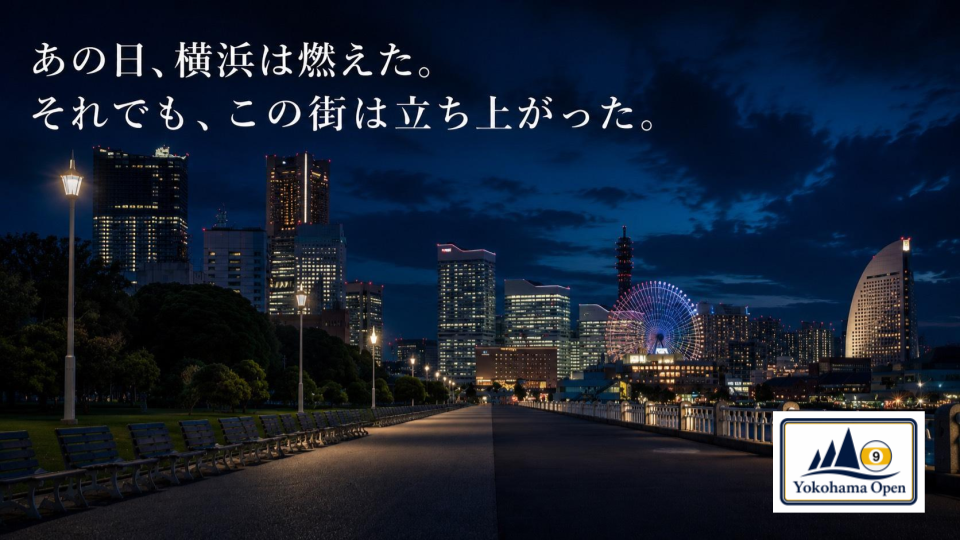
Today is September 1.
103 years have passed since that day.
The city of Yokohama burned.
It crumbled. It was cut off.
But this city rose again.
It built a park on the rubble, and a new city on the scorched earth.
There were those who reached out from the sea.
There were those who put themselves in harm’s way to protect others.
And there were people who began, once more, to live in a place where nothing remained.
In this city
Yokohama is a city that has known what it is to be broken.
That memory still remains, quietly: beneath the ground of Yamashita Park, in the roots of the trees in Yokohama Park, in the memorial in Tsurumi.
These days, natural disasters — earthquakes, typhoons, torrential rain — are on the rise.
The memory of 103 years ago is by no means a thing of the past.
On this day, we ask you to pause, just for a moment, and think.
Are you prepared enough?
Have you settled on how you will reach the people who matter to you?
A city that has been broken, and has risen again.
We are living the rest of its story.
Just for today, the Yokohama you walk through may look a little different.
With the hope that beautiful days will go on in Yokohama, now and always.