
日本語 | 繁體中文 | English | 한국어 | Tiếng Việt
Yokohama has long had a saying.
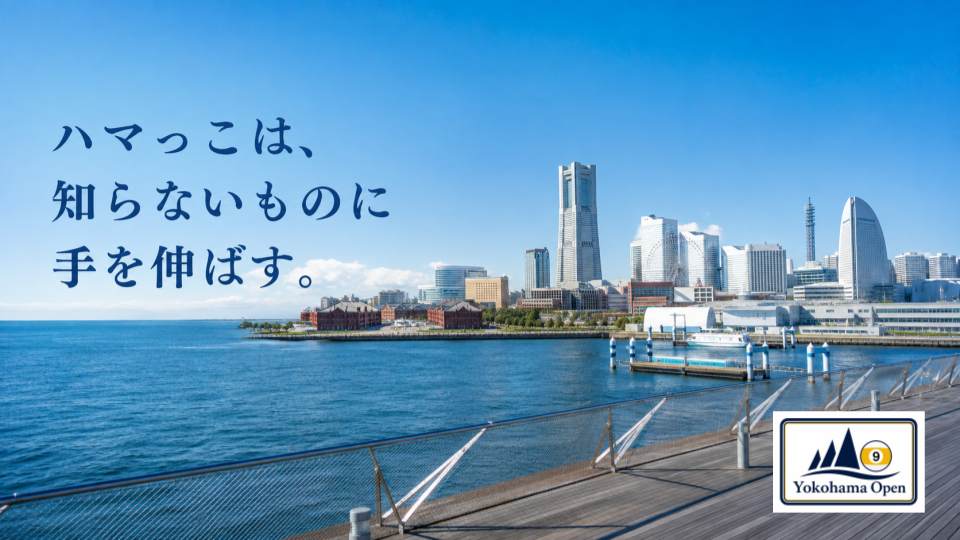
“Live here three days, and you’re a Hamakko” — a child of Yokohama.
Where you were born and raised doesn’t matter.
Even someone who arrived yesterday, once they come to love this city, is already a Hamakko.
A closed-off city would never be like this.
Not turning away what comes from outside, but finding it interesting, and folding it into daily life.
That temperament is what built this city.
A destiny as a gateway
In 1859, Yokohama opened its port.
Ever since, the city has been Japan’s “gateway.”
Beer, ice cream, gas lamps, railways, Western-style barbering — unfamiliar things arrived one after another from across the sea.
To the Japanese of the time, every one of them must have been something never seen before.
But Yokohama wasn’t afraid of them.
It touched them.
Tasted them.
Drank them.
Rode them.
And then changed them, in its own way.
Curry rice and Napolitan spaghetti both spread across Japan by way of Yokohama.
Each is a little different from the original.
But that “little different” became, for the Japanese, the real thing.
Reaching for the unfamiliar, and making it your own.
That was what it meant to be a Hamakko.
Keeping up appearances, and set on the real thing
The Hamakko has another face.
A love of keeping up appearances.
But it isn’t only about the surface.
Wanting to know the real thing.
Wanting to judge what is truly good.
Before asking, “Where’s that from?”, they’ve already looked it up.
Not the brand name, but why it’s good — that is what they want to know.
Perhaps that temperament was nurtured by a history of handling things from all over the world as a port city.
An eye that tells the fake from the real.
A sense that chooses by its own standards rather than chasing trends.
The Hamakko’s pride in appearances seems to me connected, somehow, to that intellectual curiosity.
On watching a quiet sport
Pool is a sport of stillness.
No running.
No shouting.
Hardly any flashy movement.
Golf may be the same.
But few people call golf boring.
Those who watch know that within that quiet, judgment and skill are packed tight.
Pool is the same.
Looking at the balls scattered across the table, the player walks.
Stops.
Thinks.
And chooses one ball.
Why that ball?
Those of us watching see the same layout.
Where would I start?
Where would I break up the cluster?
Would I attack here, or play safe?
And then the player makes a different choice from mine.
In that moment, there is an “I see.”
Or a “That never occurred to me.”
Watching thought
Flashy movement isn’t the only joy of sport.
People who watch shogi aren’t thrilled by the moment a piece moves.
They enjoy the time spent wondering, “What will be played next?”
They are following the reading behind each move.
In pool, too, we aren’t only watching the moment a ball rolls.
The time the player spends walking around the table.
The few seconds of chalking.
That quiet pause before getting down into the stance.
All of it is full of thought.
Tracing that thought is the real joy of watching pool.
Touching a way of thinking unlike your own.
Noticing an idea you’d never had.
That, I think, is an intellectual experience in itself.
Those who made what came from overseas their own
Pool, too, came from across the sea.
What the foreigners of the settlement enjoyed, the people of this city watched, touched, and made into a pastime of their own.
Just as curry became curry rice.
Just as Napolitan grew up in Yokohama.
Reaching for the unfamiliar, finding it interesting, making it your own.
Watching pool may be the same.
At first, you don’t even know the rules.
You can’t tell what is happening.
But watch for a while, and something starts to catch your attention.
“Why did they choose that ball?”
The moment that question surfaces, it has already begun to become yours.
Three days to a Hamakko
Live here three days, and you’re a Hamakko.
Then watch three matches, and perhaps you’re already a pool fan.
Reach for the unfamiliar.
If it’s interesting, make it your own.
Because this is that kind of city, pool suits Yokohama well.
To begin with, try watching just one match.
👉 Yokohama Open Official YouTube channel
👉 See the Yokohama Billiard Hall Guide