
日本語 | 繁體中文 | English | 한국어 | Tiếng Việt
1972. A live-music club in Kyoto.
You could count the audience on your fingers.
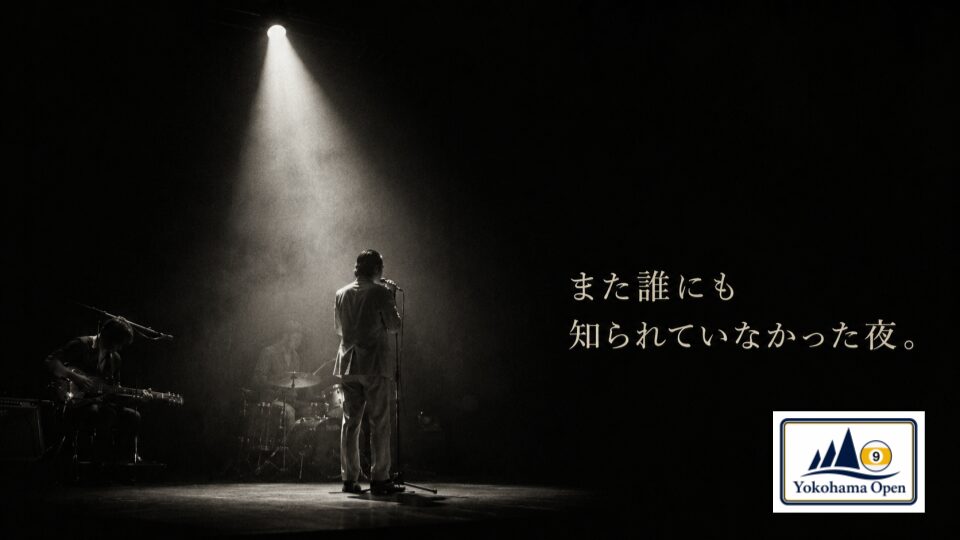
The lights were low, and cigarette smoke drifted.
No one knew their names.
Still, Nyudo Nishimura was shouting from the pit of his stomach.
The shout rang through the cramped room.
Yoichiro Hatta’s bottleneck slid along the strings, and a raw, muddy sound tore through the air.
It wasn’t to win anyone’s approval.
Nor did they want to make it big.
Only because they believed this was the real thing.
In an age when no one cared
In Japan at the time, the blues was underground.
Most of what passed for “blues” was consumed as pop-song mood or rock gimmickry.
Hardly any band tried to bring real Chicago blues — the raw, muddy ring of electric guitars — onto the stage with all its original heat.
The media ignored them.
There were no sponsors.
At first, no big venue called on them either.
Still, they kept going.
Without faking it.
Without compromise.
In a darkness no one was watching, they went on polishing the beauty of their form.
The real thing grows in solitude
Hatta’s slide guitar was something foreign in the Japan of those days.
When most guitarists leaned toward rock, under the spell of Eric Clapton, he held fast to the raw bottleneck style that ran down from Elmore James and Muddy Waters.
Nishimura’s vocals were the same.
He didn’t drift toward folk.
He didn’t try to fit the fashion of the day.
The shout of the Black bluesmen, the drag in the phrasing, the volume wrung from deep in the gut — he tried to reproduce it with his own body.
How do you sing the blues in Japanese, with a Japanese frame?
He faced that question without a single compromise, and kept on facing it.
Even if no one valued it.
Even if no one knew.
1974: they stood on a festival stage
The One Step Festival in Koriyama.
On the stage of Japan’s first large-scale rock festival stood the Blues House Blues Band.
It was the moment the underground blues stood on the same stage as the cutting edge of Japanese rock.
What they had polished in the corners of dark clubs came out under a great light.
That autumn, they broke up, just like that.
Only two years.
But without those two years, Fusanosuke Kondo, and Breakdown too, might have taken a slightly different shape from the one we know.
The landscape of Japanese blues, I feel, would have been something else as well.
Seeds are sown where no one is looking.
Pool is still in the dark
Pool is still in the dark.
The public spotlight hasn’t reached it yet.
The media don’t give it much attention yet.
Most people still don’t know what happens at the table.
But the real thing is surely there.
There is thought poured into a single ball.
There is skill built up over years.
There are players who, amid a tension beyond words, have kept delivering the cue all the same.
Still unknown to most, they have kept going all the same.
A shout changes its form
Nishimura’s shout was not anger.
The shout was expression in its purest form.
To deliver the real thing.
To let someone hear this sound.
That was all.
The wish to bring pool to many people takes a quiet form, too.
But being quiet is not the same as giving up.
Setting up the tables, keeping the records, piling up the numbers, weaving the words.
One ball at a time, one match at a time, one article at a time.
Pushing the underground up into the overground needs no glamorous means.
To keep delivering the real thing, as the real thing. The landscape, perhaps, can change from nowhere else.
Those nights of shouting in dark clubs made Japanese blues.
For now, there is only a small light over the table.
Even so.
What is built up where no one is watching will, one day, change the landscape.
Just as the blues of those nights did.
👉 Yokohama Open player stats
👉 Numbers don’t take away from the thrill.