
日本語 | 繁體中文 | English | 한국어 | Tiếng Việt
Step out of Kannai Station, and the air splits in two.
Walk east, and there is Bashamichi. A street lined with cobblestones and gas lamps.
The ginkgo trees of Nihon-odori sway in the wind.
The solid walls of the Prefectural Government Office.
The clock tower of the Port Opening Memorial Hall.
Yokohama’s “public face” is here.
Climb the hill of Yamate, and you come to a quiet residential district lined with Western-style houses.
Land prices among the highest in Yokohama.
In its view down over the harbor, 150 years of history are layered.
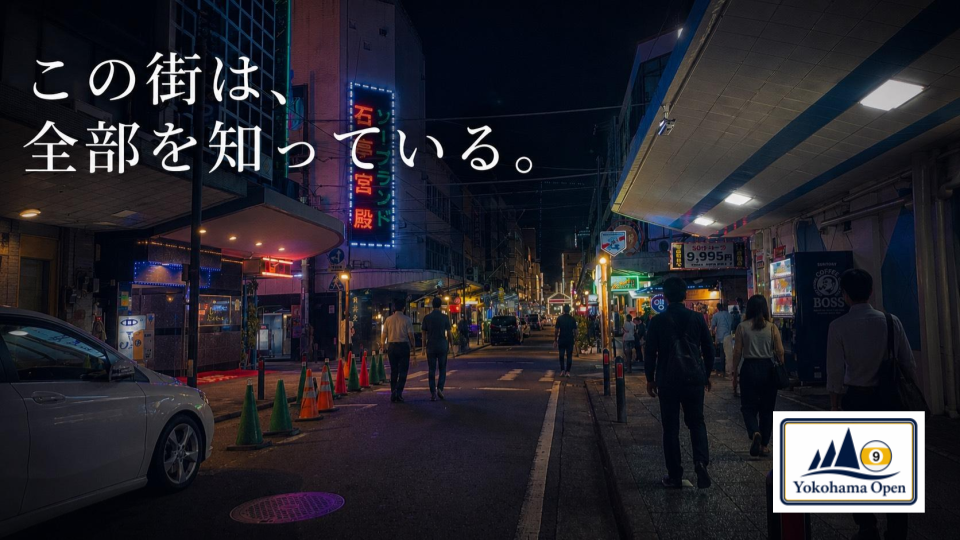
But leave the station and walk west, and the city changes its expression.
Step one street back from Isezaki Mall, and the color of the neon changes.
The lettering on the signs gets a little bigger.
Touts’ voices carry from deep in the alleys.
Walk farther north, and you reach Fukutomicho.
Quiet by day, but at night another town appears.
Stand in front of Hinodecho Station, and the air is different again.
Walk along the Ooka River, and there are different people again.
And a little to the south, there is Kotobukicho.
Right at the foot of the Yamate hill lies Kotobukicho, long known as a district of simple lodging houses (doya).
The area with the highest land prices in Yokohama and a town of day laborers sit just a few minutes’ walk apart.
This town doesn’t hide
There are plenty of towns that show only what is pretty.
Station fronts tidied up by redevelopment.
Uniform façades.
The inconvenient things, pushed out of sight.
Kannai isn’t like that.
The history of the main streets and the smell of the back streets share the same station.
The night view from the windows of luxury condominiums and the neon of the back alleys lie under the same sky.
In a place where someone is celebrating success, someone else is just getting through the day.
Without hiding it, without dividing it, the town keeps it all, just as it is, as part of itself.
Holding everything
All kinds of people live in this town.
People in suits.
People in work clothes.
Tourists.
People walking alone.
Two people laughing together.
Each of them has a night of their own.
Those who live on the Yamate hill.
Those who greet the morning in Kotobukicho.
Those who walk under the lights of Fukutomicho.
This town still has room for all kinds of people.
Success, and failure.
Light, and shadow.
Nights you won, and nights you lost.
It takes them all in, just as they are.
Deep in the alley, a green table
Walking through Kannai at night, you see a light in a room of a mixed-use building.
The door opens on cool air, and the green of the cloth under the lights.
All kinds of people are there.
People on their way home from work.
Regulars.
First-timers.
Someone shooting alone, in silence.
People shooting and laughing together.
The good and the not-so-good gather around the same table.
Nobody minds who is doing what.
Winners and losers raise their glasses at the same counter.
Just like this town.
It takes everything in, just as it is.
In this town, I pick up a cue
The gas lamps of Bashamichi light the cobblestones.
One alley back, the neon glows in another color.
In a town that knows both, I play pool.
The pretty and the not-so-pretty, all of it together — I love this town, which can say without hesitation that all of it is “Yokohama.”
And I think pool is that kind of place, too.
The ball that went just right, the ball I missed hopelessly — all of it stays as my own record.
It can’t be erased, and it can’t be hidden.
But that’s all right.
Just as this town is.
👉 See the Yokohama Billiard Hall Guide
👉 Billiards resources from Japan and around the world, organized by purpose: Billiards in Depth (latest updated hourly)