日本語 | 繁體中文 | English | 한국어 | Tiếng Việt
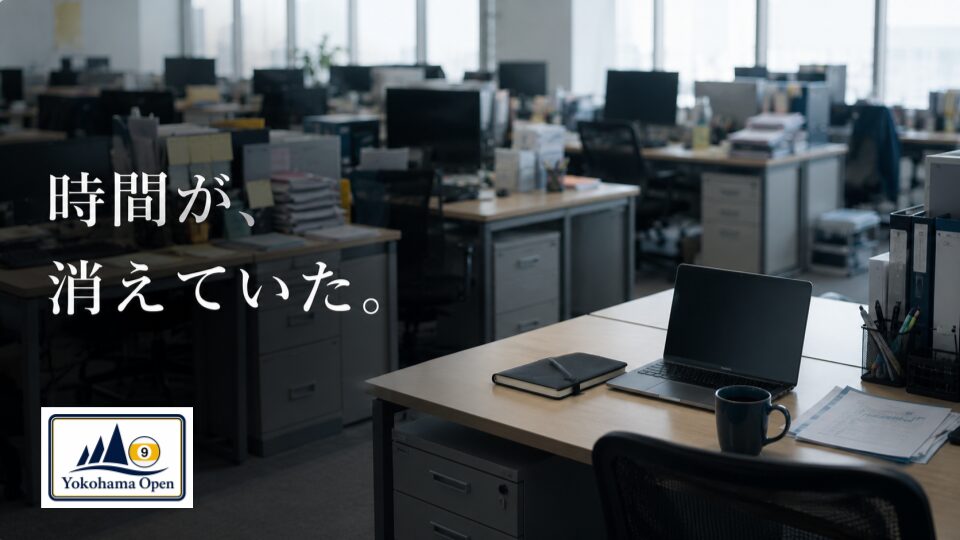
Papers were piled on my desk.
The deadline: the day after tomorrow.
Three meetings got booked.
Emails, still unanswered.
Before I could work out where to start, yet another task came raining down.
I looked at the clock.
It was already evening.
What had I been doing all day?
My head was noisy, yet it felt like nothing was moving forward.
— That went on for days.
I managed, somehow, to meet the deadline.
On the way home, for a change of pace, I stopped by a pool hall.
I took hold of the cue.
How to attack this layout.
Where to stop the cue ball.
Before I knew it, I was thinking about nothing else.
Work, the meeting earlier — it had all vanished from my head.
Before I knew it, two hours had gone by.
There are moments when time disappears
The psychologist Mihaly Csikszentmihalyi gave this state a name.
“Flow” — a state of being so absorbed in one thing that you forget even time.
The noise around you fades, and deep focus and fulfillment arise.
This state, also called the zone, doesn’t come only to special people.
When the conditions are right, it can happen to anyone.
Three conditions for flow
Flow has three conditions.
The first is a balance between challenge and skill.
Too easy and you get bored; too hard and you get anxious.
At a difficulty where you think, “I might just reach it,” people become absorbed.
The second is a clear goal.
Knowing exactly what you should be doing right now.
The third is immediate feedback.
Knowing the result of what you did right there and then.
When these three come together, people slip naturally into flow.
In pool, all three come together
“Put this ball in that pocket” — the goal is visually crystal clear.
The moment you shoot, you know whether it went in.
Whether the cue ball moved the way you meant comes back in a fraction of a second.
You can set the difficulty yourself, too.
Choose a layout just within your reach, or take the safe route — that’s up to you as well.
And during your turn, you can focus on nothing but the ball in front of you.
👉 The true value of losing yourself in something.
Back at work
The next day, before a meeting, I noticed something.
The feeling of focus was easier to call back.
Once you’ve experienced flow, it is thought that you may be able to bring that feeling to other situations too.
Perhaps that’s why, the day after I play pool, even the way I face my work feels a little more settled.
Of course, that alone doesn’t make work go well.
Even so.
Those two hours, when time disappeared.
They made the next day’s me just a little lighter.
👉 See the Yokohama Billiard Hall Guide
References
- Csikszentmihalyi, M. (1990). Flow: The Psychology of Optimal Experience. Harper & Row.
- Fong, C. J., Zaleski, D. J. & Leach, J. K. (2015). The challenge–skill balance and antecedents of flow: A meta-analytic investigation. The Journal of Positive Psychology, 10(5), 425-446. doi:10.1080/17439760.2014.967799
- Harris, D. J., Vine, S. J. & Wilson, M. R. (2017). Neurocognitive mechanisms of the flow state. Progress in Brain Research, 234, 221-243. doi:10.1016/bs.pbr.2017.06.012
👉 Billiards resources from Japan and around the world, organized by purpose: Billiards in Depth (latest updated hourly)