
日本語 | 繁體中文 | English | 한국어 | Tiếng Việt
The clock in the meeting room reads a little past ten.
The section chief is walking us through the plans for next month’s trade show.
Where to put the reception desk.
There was one thing I could say.
Last year, we set it right in front of the entrance, and the line spilled out into the aisle.
Shift it a little to the side, and that would do it.
In my head, I build the sentence.
Open with “About last year,” mention the line, and end on “to the side.”
The moment he pauses, I’ll say it.
He doesn’t pause.
Whenever one topic is about to close, a single “So” carries him into the next.
Even as I am putting it together, he keeps talking.
“…Anyway, reception the same as usual. So, next up is load-in.”
My mouth half opens, and closes.
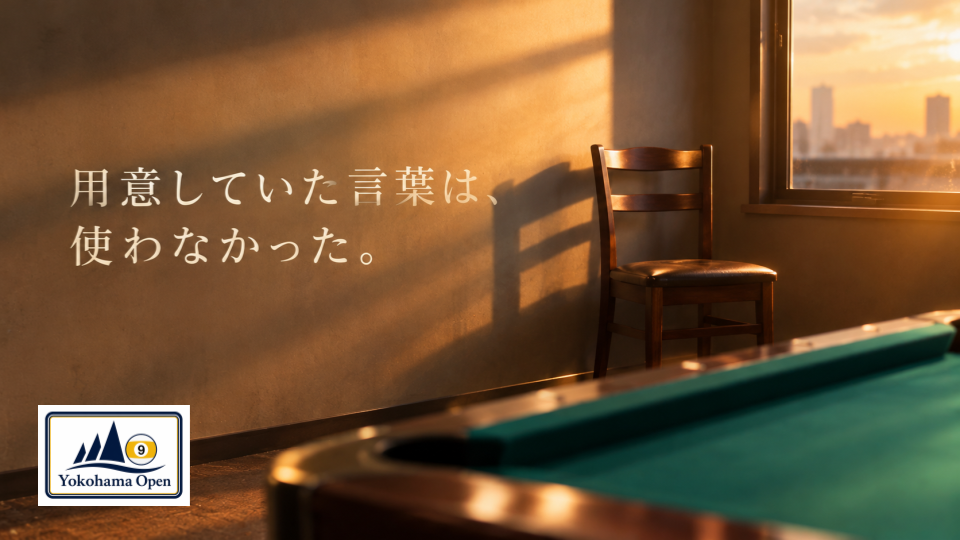
The words I had ready, I never got to use.
In the corner of my notebook, all that remains is “Reception – side.”
Some researchers once compared everyday conversation across ten of the world’s languages.
In major languages and in the speech of small villages alike, the silence when one speaker gave way to the next was kept very short.
Talking over each other was avoided, too.
The averages for each language, they report, all fell within about a quarter of a second of the overall mean.
With so little time, how do people manage to answer at all?
In another study, people listened to quiz questions while their brain activity was tracked.
Once the answer could be retrieved, preparation to speak began, they report, in less than half a second.
Sometimes that was several seconds before the question had ended.
While we are still listening, we are already getting ready for our turn.
In that meeting, at what point in his talk had I started building my sentence?
Perhaps I never heard his last words at all.
On Friday, after work, I shot pool with a senior colleague from my old department.
About once a month, that is how it goes.
Nine-ball.
While he shoots, I wait in a chair by the wall.
Cue upright, held between my knees.
The table is not mine to touch.
Once he is down on the shot, he does not linger.
One breath, and he strokes.
The 1 drops.
The 2 drops, too.
Meanwhile, I am building my next turn.
If he misses, I start with the red 3.
Into the near corner.
Then the 5.
His third shot slides off the corner he was aiming for.
The 3 comes off one cushion and stops near the middle of the table.
The cue ball rolls all the way to the far end.
I get up from the chair and walk around behind the cue ball.
The 3 is farther away than I thought.
And the 5 sits half in the way.
Every pattern I had built in that chair now belonged to some other table.
I look back. He is sitting in the chair, his cue held between his knees.
Now it is his turn not to touch the table.
I stay standing at the table for a while, looking only at the layout in front of me.
Monday, the morning meeting.
The section chief is going over the plans for load-in.
Partway through, another thing I could say comes to mind.
The sentence starts to come together.
His last words were, “…Now, who was it that knows about that, again?”
A brief pause opens.
The words I had ready, I did not use.
“You mean the key to the loading entrance, right?” I ask.
👉 See the Yokohama Billiard Hall Guide
References
- Stivers, T., Enfield, N. J., Brown, P., Englert, C., Hayashi, M., Heinemann, T., Hoymann, G., Rossano, F., de Ruiter, J. P., Yoon, K.-E. & Levinson, S. C. (2009). Universals and cultural variation in turn-taking in conversation. Proceedings of the National Academy of Sciences of the United States of America, 106(26), 10587-10592. doi:10.1073/pnas.0903616106
- Bögels, S., Magyari, L. & Levinson, S. C. (2015). Neural signatures of response planning occur midway through an incoming question in conversation. Scientific Reports, 5, 12881. doi:10.1038/srep12881
👉 Billiards resources from Japan and around the world, organized by purpose: Billiards in Depth (latest updated hourly)